
A Slow Morning on the Homestead
Morning arrives softly in the Northern California hills where Blue Heron Botanicals is made — light drifting through coastal fog, warming the garden beds, touching calendula, comfrey, and lemon balm. On the porch, jars of herb-infused oils warm in the first light, beginning their slow, sun-led transformation.
Out here, the day moves with the land. Power follows the sun. Meals follow the seasons. And every balm begins in real soil, real sunlight, and in the two hands of a maker who lives the life she crafts for others — slow, intentional, deeply connected.
Today, we sit down with Theora — herbalist, mother, gardener, and founder of Blue Heron Botanicals — to explore the story behind her work and the off-grid lifestyle that infuses every product she makes.
Meet Theora
Raised among the fields and forests of the Lake Champlain Islands in Vermont, Theora has spent her life in relationship with plants. Childhood experiments with woodland herbs evolved into formal study, apprenticeship, and eventually into the small-batch apothecary she runs today from her off-grid homestead.
Here, she grows many of the herbs that become her balms. She wildcrafts St. John’s wort each summer when the hillsides glow gold. And she hand-pours every tube with a commitment to true sustainability — from organic oils to compostable packaging sourced close to home.
Her training in horticulture, herbalism, and a deep belief that skincare should be as clean and nourishing as the food she grows — guides everything she makes. Each balm carries the pace of her life: slow, sunlit, grounded, and crafted with a quiet reverence you can sense in every balm.

Life on the homestead
You live completely off-grid in Northern California. What does that look like day-to-day?
Living off-grid means we’re not connected to municipal utilities — we generate and manage everything ourselves. Our electricity comes entirely from solar, and because we’re tucked into the woods, our days naturally follow the weather. Sunny days give us an abundance of energy; winter invites us to be ultra-intentional with our energy usage.
We use well water, rely on propane instead of natural gas, and heat with wood in the colder months. It’s simple and elemental. You become acutely aware of what things actually require to run — and how little you truly need.
People often assume off-grid means living far from everything, but we’re only about ten minutes from town. All our neighbors are grid-tied; our property just happens to be in a place where extending utilities wasn’t practical. Ironically, our solar is more reliable than grid power — when storms knock out electricity for a week, our lights stay on.
There’s a rhythm to it, an awareness, that I really love.

Growing with the land
What does your garden look like on the homestead?
My garden is a big part of our everyday life out here — rows of vegetables, tomatoes, leafy greens, herbs for cooking, whatever the season offers. Since we’re off-grid, eating seasonally comes naturally. In the summer, most meals come straight from the garden; in winter, it’s a mix of preserved food and store-bought produce.
Which plants do you grow or wildcraft that go directly into your skincare?
A lot of the herbs in my balms and salves come straight from the land around me. I grow calendula, lemon balm, comfrey, and yarrow — the herbs that become those sun-warmed, slow-infused oils.
I wildcraft St. John’s wort — meaning I harvest it from the wild in a sustainable way, never taking more than 25–50% of a patch so it can regenerate. It’s a strong medicinal plant, and collecting it is a ritual. I pick only the buds, never whole branches. Some years it’s abundant, others it shifts location entirely. I also taught my mom how to harvest it in Vermont, so some of the oil comes from the East Coast too.
Each plant is harvested by hand, season by season, bringing its own kind of medicine into the formulas.

Becoming a herbalist
How did you first get into herbalism?
I grew up on 30 acres in Vermont with a big garden, chickens, pigs, and parents who were eco-minded and frugal. Being outside was just part of daily life, and I was always surrounded by plants — that’s really where my interest began.
I went on to study Plant & Soil Science at the University of Vermont, focusing on horticulture and landscape design, along with botany and art. But everything clicked during my senior-year internship at an herbal shop called Purple Shutter Herbs in Burlington, CA. There I met my Mentor, Laura Brown, and where I first learned how plants could move beyond landscaping and food into skincare and medicine.
My true “aha moment” happened in the shower while using a Bath & Body Works aromatherapy scrub — I recognized the Latin plant names on the label and suddenly understood that plants were the backbone of so many products I’d never questioned. That moment sent me down the path of herbal skincare.
During that same internship, I created my first-ever product: the original formula for Wound Warrior. And around that time, I started making my own lip balms using infused oils from herbs I’d harvested myself. After a lifetime of relying on petroleum-based balms (a very Vermont problem!), making my own felt completely different — cleaner, richer, more effective. Once I felt that difference, I never turned back.
What inspired the creation of Blue Heron Botanicals?
I’d been making herbal products for years while also working in massage and yoga, but after having my child, I wanted work that fit more naturally with raising a family on the homestead. That’s when I decided to focus on herbal skincare full-time.
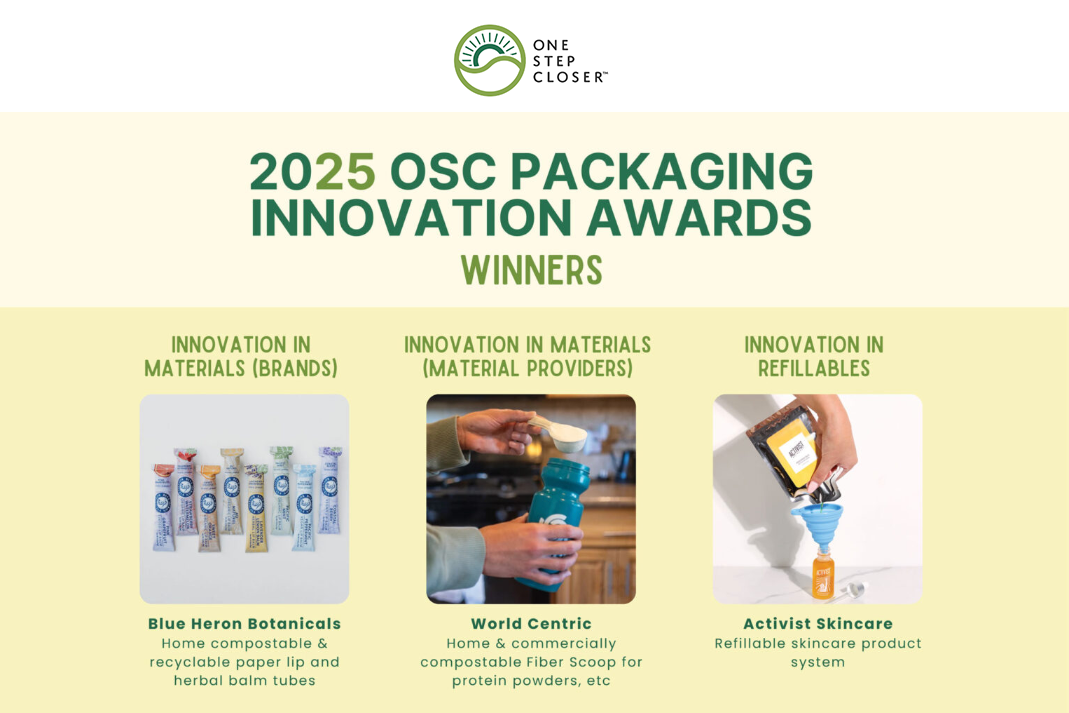
I had almost launched using plastic tubes—until I learned about the Great Pacific Garbage Patch. I’d been making natural products for years, but this was the moment everything clicked. I stopped everything, went down a huge sustainability rabbit hole, and committed to creating something truly zero-waste.
The name Blue Heron comes from my childhood. Growing up by Lake Champlain, herons were these magical creatures to me—solitary, graceful, quiet, yet long-limbed and awkward (very much like me).
Sustainability at the heart
Why was zero-waste packaging non-negotiable?
Once I began researching the environmental impact of packaging, the decision was obvious for me. Plastic lasts for hundreds of years, and most of it ends up in oceans and landfills. I didn’t want my products adding to that problem.
Some of my commitment to sustainability comes from visiting my aunt in St. Thomas, in the Caribbean. I first went when I was around nineteen or twenty, and the reefs were full of coral and fish - think Finding Nemo. When I returned about eight years later, the change was shocking — less coral, fewer fish, more bleaching. Seeing that shift with my own eyes made all the research I’d been doing about plastic pollution feel very real.
Paper packaging became the most responsible choice: it breaks down naturally, can be composted or recycled, and has a much smaller environmental footprint. It’s not just about ingredients being clean — the packaging needs to be, too.

Your sourcing is incredibly intentional. How do you choose your ingredients?
I prioritize local ingredients first, then regional, then domestic — and only look globally when there’s truly no other option. But sourcing isn’t just about where things come from; it’s also about what I avoid. I stay away from anything with a long, convoluted supply chain, heavy processing, or unclear environmental or labor standards. I want every ingredient to have a clean, ethical path behind it.
That’s why I source olive oil from a California grower, lavender from the Pacific Northwest, citrus oils from U.S. orchards, beeswax from local or regional beekeepers, and packaging from Southern Oregon. When I do use ingredients from abroad, like shea or cocoa butter, they’re always organic and fair trade.
Transparency matters to me, so I list exactly where every ingredient comes from on my website.
The craft: how the products are made
Walk me through your oil infusion process. What does it mean when you say your balms start with “herbal infused oils”?
All of my products begin with infused oils — which are simply oils that have been slowly steeped with whole, dried medicinal herbs until the oil absorbs their color, scent, and therapeutic properties. It’s the same idea as making a long-steeped tea, but with oil instead of water.
These infused oils are what give the balms their real herbal power. Instead of adding a tiny amount of an extract or essential oil at the end, I’m infusing the base itself — the foundation of the formula — with plant medicine.
There are two ways I create them:
1. Solar Infusion — the traditional method
Jars filled with herbs and oil sit in gentle sunlight for weeks. Here on the coast, the sun is warm but mild, so the glass slowly warms and encourages the herbs to release their constituents naturally. It’s a patient process — no rushing, no high heat — just sun, time, and daily attention.
2. Warm-Dark Infusion — the winter method
When sunlight is scarce, I keep the jars in my oven using only the pilot light. It keeps them at a low, steady warmth (around 70–80°F), similar to the heat they’d get from the sun. I shake the jars regularly, watch for moisture, and strain everything by hand when the herbs have fully given themselves to the oil.
Some formulators use quick stovetop or crock-pot methods, but I avoid those because they “cook” the herbs. You can actually smell the difference — the oils lose nuance and potency. The slow, low-heat method keeps the herbs vibrant and intact, which makes a big difference in the final product.

The balms: her signature work
What inspired you to create lip balms, and what makes yours different?
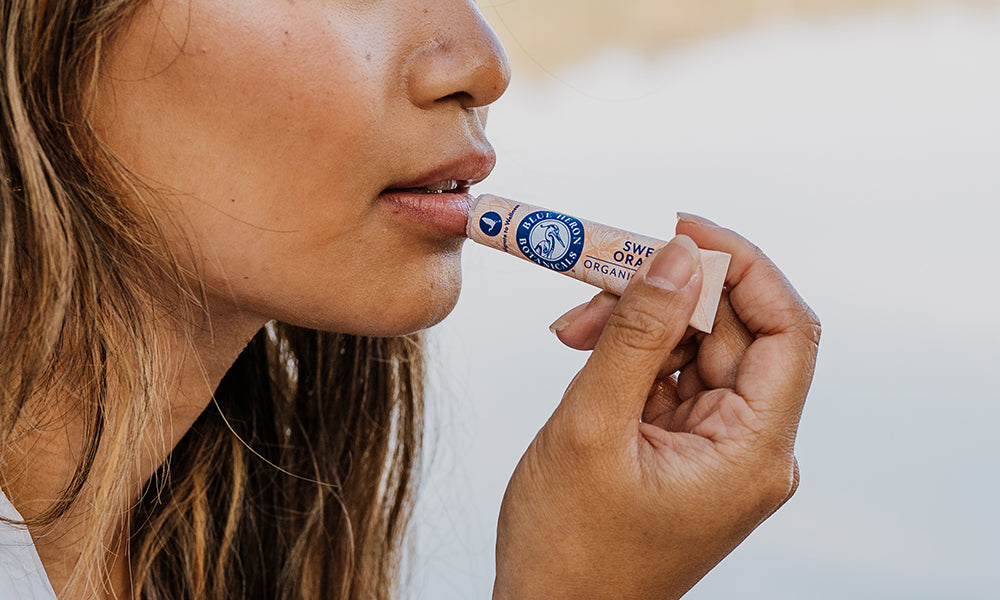
Growing up in Vermont with its cold winters, I’ve been a lip balm addict my whole life and started formulating nearly 20 years before launching the brand. Everyone I gave my balms to loved them, and they were always better than anything I could buy.
Most lip balms are made with three to six basic ingredients and sit in warehouses for months or years. Some are petroleum-based. Others use flavor oils that irritate people’s lips.
Mine are different because:
-
They’re made with fresh, house-made herbal infused oils, not plain oils.
-
I use a higher ratio of butters to create a balm that stays on your lips.
-
Every formula was developed over years—not bought from a manufacturer.
-
I make everything in small batches so they’re incredibly fresh.
I intentionally make my balms thicker so they last longer on the lips without constant reapplication.
Your Lavender Lemon balm has a cult following for cold sores. Why is it so effective?
The star is fresh St. John’s wort, which contains hypericin—a compound with antiviral and anti-inflammatory properties that support nerve tissues (where the virus lives).
Lemon balm is another powerful antiviral, and lavender helps calm the nervous system—important because stress is a huge trigger.
People tell me it prevents outbreaks entirely when used at the first tingle. Others who use it daily say they almost never get cold sores anymore.

Weaving herbalism into everyday life
For people who aren’t close to nature, what’s an easy way to bring herbalism into daily life?
Herbalism can start incredibly simply. It doesn’t need to look like an apothecary or a homestead — it can begin right in your kitchen.
Cooking herbs like oregano, rosemary, thyme, ginger, and turmeric are all medicinal. The key is choosing herbs that look vibrant and green, not dull or faded.
Tea is another gentle entry point. Chamomile and mint are two of my favorites for beginners — both support digestion, and chamomile brings a calming effect. I always have a cup of tea going. That little moment — the steam, the warmth, the herbal infusion, just taking a few breaths — it becomes a ritual in itself.
And then there’s dandelion — a so-called “weed” that’s actually a powerful medicinal plant. Its leaves make a great bitter green for salads, the flowers are edible, and the root can be dug up, dried, and turned into tea or tincture. As long as it hasn’t been sprayed, the whole plant is useful.
Herbalism doesn’t need to be complicated or mystical. It’s really just about noticing the plants you already interact with — and letting them support you in small, everyday ways.